Water is essential for healthy tree growth, but too much water can be just as harmful as too little. Overwatering can deprive roots of oxygen, encourage disease, and weaken the overall health of a tree. Many homeowners assume extra watering is always beneficial, especially during warmer months, but excessive moisture can quickly create serious problems. Recognizing the warning signs of overwatering can help protect your trees. At Tree Doctor 911, our local arborists provide tree health services in the greater Albuquerque and Sante Fe areas, and we can identify and address signs of tree stress. Here’s a look at four signs that a tree is being overwatered. Yellowing Leaves One of the more common signs of overwatering is yellowing leaves. When roots sit in overly saturated soil, they struggle to absorb oxygen and nutrients properly, causing foliage to lose its healthy green color. Unlike drought stress, which often causes dry and brittle leaves, overwatered trees may have softer, yellow leaves that fall prematurely. Persistent yellowing is often an early warning sign that watering habits should be adjusted. Soggy or Constantly Wet Soil Healthy trees need soil that can drain properly between waterings. If the ground around the tree remains soggy for long periods or feels constantly wet, the roots may be receiving too much moisture. Standing water near the base of the tree is another indication of poor drainage or excessive watering. Overly saturated soil increases the risk of root rot and other fungal diseases that can weaken the tree. Fungal Growth Around the Tree Excess moisture creates conditions for fungi and mold to develop around the base of a tree. Mushrooms growing near the roots can indicate that the soil is staying too wet for extended periods. Fungal growth may also point to decaying roots beneath the surface. Addressing watering issues early can help reduce the risk of disease and root damage. Dying/Decaying Roots Overwatered trees often develop root problems because roots need oxygen to survive. Constantly wet conditions can cause roots to rot, decay, and lose their ability to support the tree. Signs of root damage may include poor growth, thinning foliage, and branch dieback. If root rot becomes severe, the tree’s stability and overall health may be permanently affected. Tree Care in Santa Fe and Albuquerque, NM For expert tree health services in Santa Fe and Albuquerque, contact Tree Doctor 911 at 505-461-0163 . Feel free to give us a call to request a tree services estimate in New Mexico !
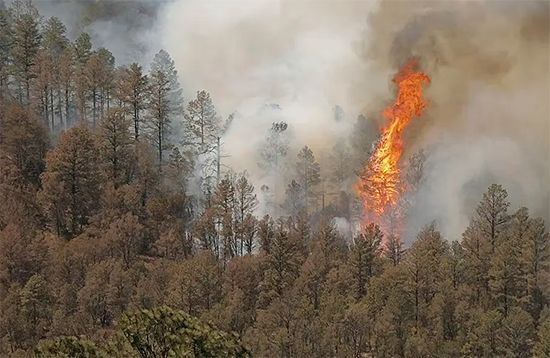
The flaming tree in the photo above is a perfect example of how a dead or unhealthy tree can quickly turn into a major fire hazard. A healthy tree that has been cared for by eradicating the parasites that kill parts of the tree, should be totally alive with no dead wood in it--and is not an ideal fuel for any fire to burn--but is actually a fire retardant. Healthy trees will help to stop a forward-moving fire. The wood from a healthy tree is full of water so much so, that a piece of firewood cut from a live tree will sometimes weigh three times as much as that same piece of wood once it is dried. The healthy tree is literally filled with and holds water like a sponge. It will not readily burn, but will put out great amounts of smoke (unburned particles) when put into an environment where fire has made the surrounding temperature sometimes hundreds of degrees hotter. Before the wood can burn, first the heat of the existing fires must dry the wood out. The wet wood will omit great amounts of smoke, which works to take the oxygen out of the healthy fire. Oxygen is necessary for a fire to burn and the smoke works to destroy oxygen, which is an accelerant that the fire depends on for energy to reach maximum efficiency and move rapidly. Oxygen to a fire is almost as powerful as vaporized petroleum is to a fire. Without oxygen there is no fire! A piece of green healthy wood about firewood size (~18 inches,) will have about 8 to 10 pounds of water in it (water weighs approximately 8 pounds per gallon.) If you have a large campfire that was burning brightly and dumped one gallon of water on it, what would be the effect on the fire? It would greatly diminish or maybe even extinguish the before blazing fire. The wet wood in a healthy tree works the same way, as a barrier to slow the fire, not accelerate it. If you build a campfire as large as a Volkswagen with dry wood then to feed the fire you put twenty 18 inch pieces of green firewood on it, what will happen? The green wood will not be fuel for the fire, but will help extinguish it. Smoke will be the first by-product of the green wet wood produced. The green wood will immediately shoot the humidity sky high in the fire dropping the temperature of the fire, and producing thick smoke which will remove much of the oxygen from the fire, which the fire needs to thrive. The trees on the planet in the preceding millennia would have been burnt out completely without natural barriers for fires. Of course geography creates barriers, but walls of healthy trees can and have completely stopped fires as well. Countless past forest fires that have raged out of control were in thriving forests that contained partially dead groves of trees, which greatly accelerated the propagation and speed of such fires. USDA says 'over 90 percent of the trees that die from parasites are from bark beetle' At Tree Doctor 911, we are the only company in America that offers a 5 month life warranty on your trees we treat and save. We have been in business since 1938--and have never every sprayed trees since the business began--because that chemical is poison to our pollinators and our beneficial insects, and can be deadly to animals, people and many beneficial parts of the environment. We microinject all of our medicine we use systemically into the tree in order to minimize harm to anything that does not attack the tree directly.
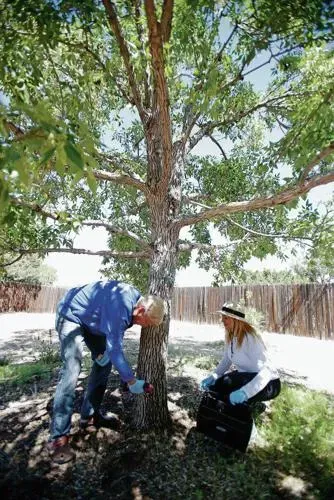
There are times it seems when only Steve Thomas and his Tree Doctor 911 crew can save a sick or dying tree. Around the world, from diagnosing ailing trees from the back of an elephant in Thailand to administering first aid to a severely wounded Russian olive tree in Eldorado, Thomas said he “almost never loses” a tree. Thomas, the son of a Clovis nursery owner and tree healer, works out of offices in Albuquerque and his major-projects center in Bijagua, in Costa Rica’s Guanacaste province. However, he has been spending more time of late in Santa Fe, where he says “they have a great heart to save trees. … People here are more tree-friendly than they are in other parts of the state.” Thomas plans to open a Santa Fe office sooner than later, and push the City Council toward supporting tree-preservation measures. Also in New Mexico, Tree Doctor 911 tends to to a large stand of cottonwoods on a ranch about 15 miles north of Grants — trees that were planted in 1803 — as well as six 300-year-old apple trees in the same area. He also has diagnosed and treated trees in, among other places, New Zealand, the South American Amazon and the Solomon Islands. He and his Costa Rican project director, Liliana Sandoval, here temporarily to help with his growing Santa Fe business, recalled how they rescued a beloved but ailing tree in a Costa Rican village, saving it, for a short time at least, from deforesters who had already claimed about 7,000 trees. “The people felt like the tree was a member of the family,” Sandoval said. “I saw tears.” Thomas said his company takes what might be a considered a triage approach to saving trees and never sprays chemicals into the environment to treat a tree. “We are in the tree-saving business,” Thomas said. “We are completely different from the other guys. We will take a tree down. But we try to talk people out of doing that, and we only do it as a last resort.” Thomas cited his efforts to maintain and find new remedies drawn from nature. “We are bee-friendly, we are environmentally-friendly.” Rather than spraying a tree with chemicals, Thomas will inject it with the appropriate pesticides or fungicides, or various minerals and nutrients to boost a tree’s immune system — including plant stem cells — “plants to heal plants.” “We are always looking in our travels for answers that have been in use by indigenous populations,” he said. He cited indigenous people in the Amazon who use a resin-based substance from a tree to patch their canoes. It also turned out to be a way to seal tree wounds, especially when a branch is removed, Thomas said. It can be used instead of chemical-based paint, which can harm the tree. “Where most tree companies look for a big guy that can handle a chain saw well,” Thomas said, “what we are doing is hiring biologists to research ways to save trees.” He is building a research center in Costa Rica to find innovative ways to protect and save what he calls “the sentinels of our planet.” Sandoval remembered walks among the trees with her grandfather in Costa Rica. “We go with him, and we are hugging and kissing the trees. My grandfather talked to the trees all the time.” Thomas said he urges his clients to “feel the energy of the tree.” In some ways, the Costa Rican research center is an extension of his father’s efforts in Clovis to find innovative ways to save trees. “I used to watch him inject quinine into trees. And being a kid, I just figured everybody did that. But not so.” David Stoudt of Eldorado is one of the tree owners who Thomas managed to talk out of chopping down an ailing tree. “The tree looked like it was dead,” Stoudt said of his 20-year-old Russian olive tree. He said a local tree trimmer had apparently failed to clean his equipment from a previous job and infected the beloved 30-foot-tall tree with a fungus. A few months after Thomas’ crew treated the tree, “It had leaves all over the place. … It gives all kinds of shades to the house,” Stoudt said. Thomas said another Santa Fe client recently told him, “I didn’t even know you could heal a tree. I didn’t know you could fix them when they are broken.”
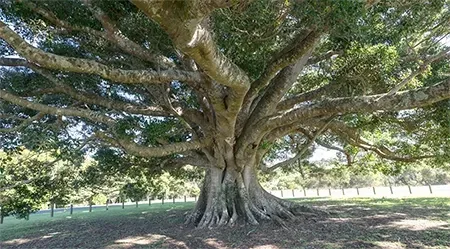
In a dry climate like Santa Fe, water stress is one of the most common threats to tree health. At Tree Doctor 911, we help homeowners identify early signs of drought stress in trees before permanent damage occurs. Trees rely on consistent moisture to support growth, nutrient uptake, and overall vitality, and when that balance is disrupted, they begin to show clear warning signs that shouldn’t be ignored. Here are the signs to look out for. Yellowing or Browning Leaves One of the earliest indicators of drought stress is discoloration in the leaves. You may notice yellowing leaves during the growing season or brown, scorched edges that appear long before fall. This happens when the tree cannot take up enough water to support healthy leaf function. Wilting Leaves and Early Leaf Drop Leaves that appear limp, curled, or wilted are often a direct response to a lack of water. In more advanced cases, trees may begin dropping leaves early in an effort to conserve moisture. While this can be a survival mechanism, it also signals that the tree is under significant stress. Sparse Canopy and Reduced Growth A thinning canopy or lack of new growth is another common symptom of drought stress. Trees that aren’t receiving adequate water will slow down their growth and may struggle to produce a full, healthy canopy. Over time, this can weaken the tree and make it more vulnerable to pests and disease. Cracked Soil and Exposed Roots Dry, compacted soil around the base of a tree is a strong indicator that moisture levels are too low. You may also notice roots becoming exposed as the soil pulls away, further reducing the tree’s ability to absorb water and nutrients effectively. If you’re noticing any of these signs, Tree Doctor 911 in Santa Fe is here to help. Our team specializes in diagnosing and treating drought stress with targeted solutions designed to restore tree health. Call our local tree health experts in Santa Fe at 505-461-0163 o schedule an evaluation and protect your trees from long-term damage .